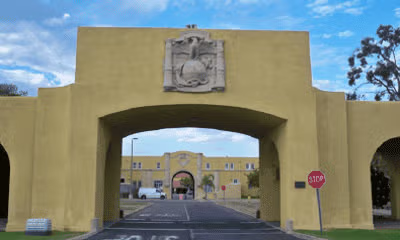
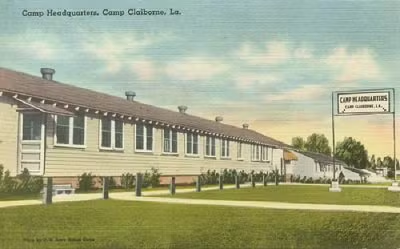
Replacement Training Centers were an integral part of World War II. Soldier's entering the Army and ultimately the War spent 13 weeks learning the fundmentals of soldiering in one of twenty one Centers that were to be be constructed during the during the Winter and Spring of 1940-1941.
This is a somewhat complete list of Commanding Generals for MCRD Parris Island, since the beginning of the recruit depots as we know them today. It may be helpful in determining dates for some MCRD Parris Island Recruit Yearbooks as some early ones weren't dated.
Marine Corps Recruit Depot, Parris Island (Marine Barracks, Parris Island before 1948)
This is a somewhat complete list of Commanding Generals for MCRD San Diego, since the beginning of the recruit depots as we know them today. It may be helpful in determining dates for some MCRD San Diego Recruit Yearbooks as some early ones weren't dated.
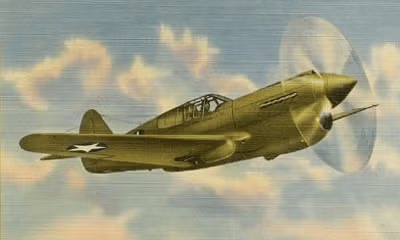
The "Linen Card Era" of Post Cards was from 1930 to 1945. Most World War II Post Cards were printed on this linen type paper stock. Soldiers would send these mementos home as proof of "being there" in the case of attending one of the camps or forts depicted in the cards. They were an inexpensive (if not free) way to correspond with loved ones or friends back home or around the world.
The Keel is the Great Lakes Naval Station Training Center's Yearbook, known more commonly as a "Cruise Book". If you didn't order one while in training, your chances of obtaining one now are slim, since a limited number of books were printed, basically only enough to cover the graduating class for that time period. Many are available to purchase online through various sources - mainly old book sellers and other retailers such as eBay and Amazon.
1859
For the United States Marine Corps, 1859 marks the year of the modern chevron as we know it today. The Uniform Regulations of that year established the silk lace pointed chevrons. The regulation stated that chevrons:
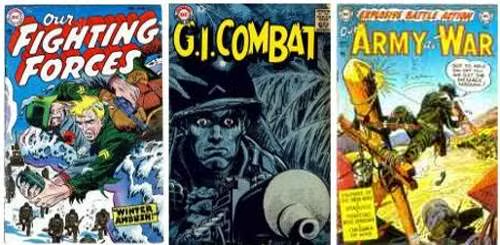
The origins of the military genre or "war comic" can be traced back to the pre World War II years. Even as early as 1939, tales of super-heroes fighting the "bad guys, i.e. Nazis" were showing up, but not until post-war sales of comics declined (probably due to readers growing tired of super-heroe after super-heroe) did the war-comic genre take off.